


If mowing the lawn is taking up more of your time than you would like, a robotic mower can be a very tempting idea.
Set it up, choose a schedule and let it keep the grass under control while you get on with something else. That is the theory, at least.
In practice, robotic mowers are very good at what they do, but only when the right machine is matched to the right garden. Lawn size is important, but so are slopes, trees, narrow passages, separate mowing areas and the general condition of the ground.
We have seen growing interest in the Segway Navimow range from customers with everything from small domestic lawns to large gardens and commercial grounds.
The question we are normally asked first is simple:
“Is it actually worth buying one?”
For the right property, absolutely. However, there are a few things worth understanding before you decide.
What makes a Segway Navimow different?
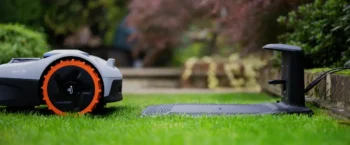
One of the main attractions of the Segway Navimow range is that it does not rely on a traditional boundary wire buried around the edge of the lawn.
Instead, you create a virtual map of the mowing area. Depending on the model, Navimow uses a combination of satellite positioning, cameras and LiDAR technology to understand where it is and navigate around the lawn.
This can make installation much less disruptive than a wired system. It also means that if you add a flower bed, change a boundary or alter part of the garden, the mowing area can usually be adjusted through the app rather than having to lift and move a physical wire.
Through the Navimow app, you can manage mowing schedules, cutting areas, restricted zones and other settings from your phone.
You can also create different mowing zones and, where there is a suitable route between them, connect separate areas of lawn.
Who is a Navimow best suited to?
A Navimow is likely to suit you if you:
- Want to spend less time cutting the lawn.
- Prefer the grass to remain consistently tidy throughout the week.
- Have a lawn that needs cutting regularly rather than occasionally knocking down.
- Like the convenience of managing the mower through an app.
- Want a quieter alternative to a petrol mower.
- Are regularly away from home and want the lawn maintained in your absence.
- Find using a conventional mower difficult or increasingly time-consuming.
It can also be a good option for larger properties where mowing has become a job in itself.
Instead of waiting for the grass to grow and then spending several hours cutting it, a robotic mower trims a small amount regularly. This helps prevent the lawn from becoming overgrown and removes the need for a major mowing session every weekend.
What do we check before recommending one?
We would not recommend a robotic mower based on lawn size alone.
Before choosing a model, we would normally consider:
- The total area of grass being maintained.
- How many separate lawns or mowing zones there are.
- Whether the mower can travel between those areas.
- The steepness of any slopes.
- Trees, buildings and other areas that may affect positioning.
- Narrow passages and difficult corners.
- Kerbs, gravel drives and changes in ground level.
- Ponds, walls, steps and unprotected drops.
- The condition and smoothness of the lawn.
- Where the charging station can be positioned.
- The standard of finish you expect.
A straightforward rectangular lawn is an easy job for most robotic mowers. A garden split into several areas, surrounded by mature trees and linked by narrow paths needs more thought.
That does not necessarily mean a Navimow will not work. It simply means choosing the correct model and planning the installation properly becomes more important.
Where can robotic mowers struggle?
A robotic mower is designed to maintain grass regularly. It is not intended to tackle an area that has been left to grow for several weeks.
If the lawn is already long, it will normally need to be cut down with a conventional mower before the robot takes over.
Very rough ground, deep ruts, exposed roots, steep banks and poorly defined edges can also cause problems. Some Navimow models are better equipped for slopes and difficult terrain than others, so it is important not to assume that every machine will handle the same garden.
You should also consider how the mower will move between separate lawns. If it would need to cross a busy road, negotiate steps or pass through a permanently closed gate, some manual involvement may still be required.
These are the sorts of details that are easily missed when buying a machine online based only on the stated maximum mowing area.
What about trees and buildings?
Trees, buildings and other obstacles do not automatically rule out a wire-free robotic mower, but they can make the installation more demanding.
Different Navimow models use different navigation technology. Some are better suited to open lawns with a clear view of the sky, while others use cameras or LiDAR to help them operate in more enclosed or complicated areas.
This is one reason we would rather look at the property before recommending a particular model.
A mower that is perfectly adequate for one 1,000m² lawn may not be the best choice for another lawn of exactly the same size.
Will it leave a good finish?
A robotic mower produces a different result from mowing the lawn once a week.
Rather than removing a large amount of grass in one go, it cuts little and often. The fine clippings fall back into the lawn, so there are no large piles of grass to collect afterwards.
Because the lawn is being maintained regularly, it tends to look consistently neat rather than alternating between freshly cut and slightly overgrown.
It may take a little time for the lawn to settle into this routine, particularly if the grass was long or uneven when the mower was first installed.
Edges may still need occasional attention, depending on the layout of the garden and whether the mower can safely travel over the edge of the lawn.
How much maintenance does a Navimow need?
A robotic mower reduces the time spent cutting grass, but it is not completely maintenance-free.
The underside of the mower will need cleaning from time to time, particularly during wet or fast-growing conditions. The small cutting blades are replaceable and should be checked regularly for wear or damage.
You will also need to keep an eye on areas where branches, fallen fruit, toys or other objects may be left on the lawn.
Before winter, it is sensible to clean and inspect the mower and store it correctly if it will not be operating during the colder months.
None of this is especially demanding, but it is worth understanding that buying a robotic mower does not mean it can be completely forgotten about.
What about wider areas or rougher ground?
The size of the area does not necessarily rule out robotic mowing.
For larger areas of regularly maintained lawn or cut turf, such as caravan parks, schools, estates, sports facilities and leisure sites, the Segway Navimow Terranox range may be a suitable option. These machines are designed for wider-area lawn maintenance and can reduce the time staff spend carrying out repetitive mowing.
Rougher ground is a different job.
If the area includes longer grass, uneven terrain, banks or sections that are not maintained as a conventional lawn, a machine such as the STIGA APEX may be more appropriate. There are also ride-on mowers, front mowers and specialist rough-cut machines available for more demanding conditions.
The important distinction is not simply whether the area is large. It is whether you are maintaining regularly cut turf or trying to control rougher, less predictable ground.
On some properties, the best solution may be a combination of machines: a Terranox maintaining the main lawn areas automatically, with a conventional mower retained for rough sections, banks, edges and seasonal work.
Is a Navimow right for everyone?
No, and we would not tell you otherwise.
If you enjoy mowing, already have a suitable machine and do not consider the time involved to be a problem, there may be little reason to change.
A robotic mower may also be the wrong answer if the grass is extremely rough, the garden layout prevents it from moving between important areas or the lawn is constantly being altered through building or landscaping work.
It is also unlikely to correct existing problems such as poor drainage, heavy compaction, moss or bare patches. It will maintain the grass, but it cannot repair a lawn that needs more fundamental attention.
The real benefit is convenience. It takes a repetitive job off your list and keeps the lawn under control without waiting for you to find the time.
For many people, that is exactly what makes it worthwhile.
Not sure whether Navimow will work on your lawn?
Choosing the right robotic mower involves more than selecting a model based on the advertised lawn capacity.
At John Osman Groundcare, we can look at the size, layout, slopes, obstacles and access between mowing areas before advising whether a Navimow is suitable.
If it is not the right solution, we will tell you. We can also discuss Terranox for wider areas of maintained turf, or machines such as the STIGA APEX for rougher and more demanding ground.
To help us assess your property, send us your postcode, an approximate area size and a few photographs of the ground. Alternatively, speak to our team about arranging a site assessment or demonstration.
We will help you choose a machine that genuinely suits the property, rather than simply selling you the first model that looks suitable on paper.